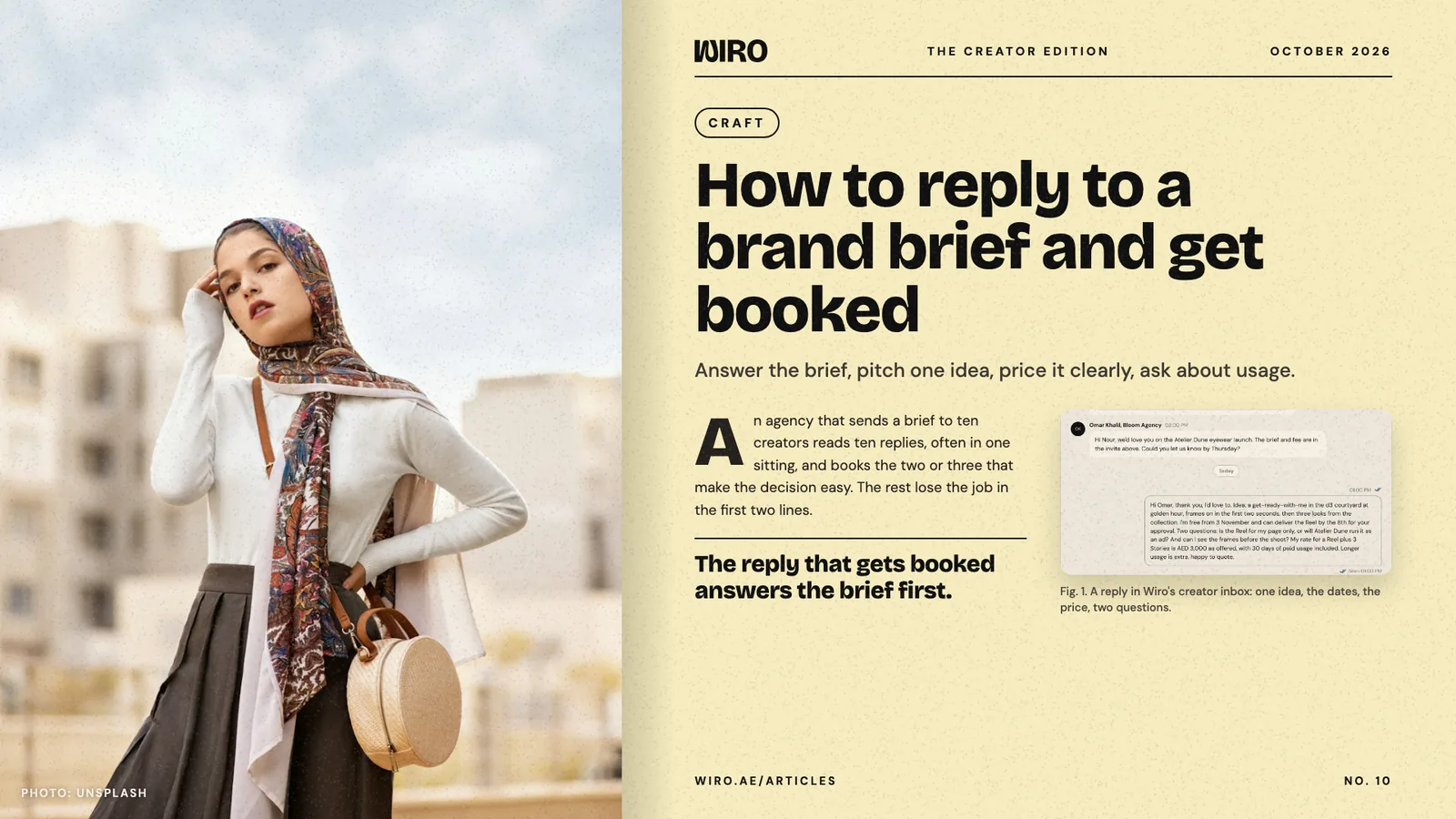
An agency that sends a brief to ten creators reads ten replies, often in one sitting, and books the two or three that make the decision easy. This guide shows what those replies have in common, using a sample creator, Nour Salem, replying to an invite from an agency in Wiro's creator inbox.
Why replies lose the job
Brands and platforms name the same reasons again and again. Partipost says the most common reason brands reject a creator's work is not following the brief, often in small ways like a missing tag. CreatorsJet lists generic outreach, no proof, a pitch about the creator instead of the brand, a poor fit and messy execution. Impact.com adds a budget mismatch and poor communication. Each one is avoidable in the reply itself.
Step 1: Read the brief for what is fixed
Before you write a word, find what is not up for discussion: the deliverables, the dates, the fee, the tags and codes, the dos and don'ts. In Wiro the invite shows all of it in one card: the fee and anything gifted, the dates, the deliverables and the brief.
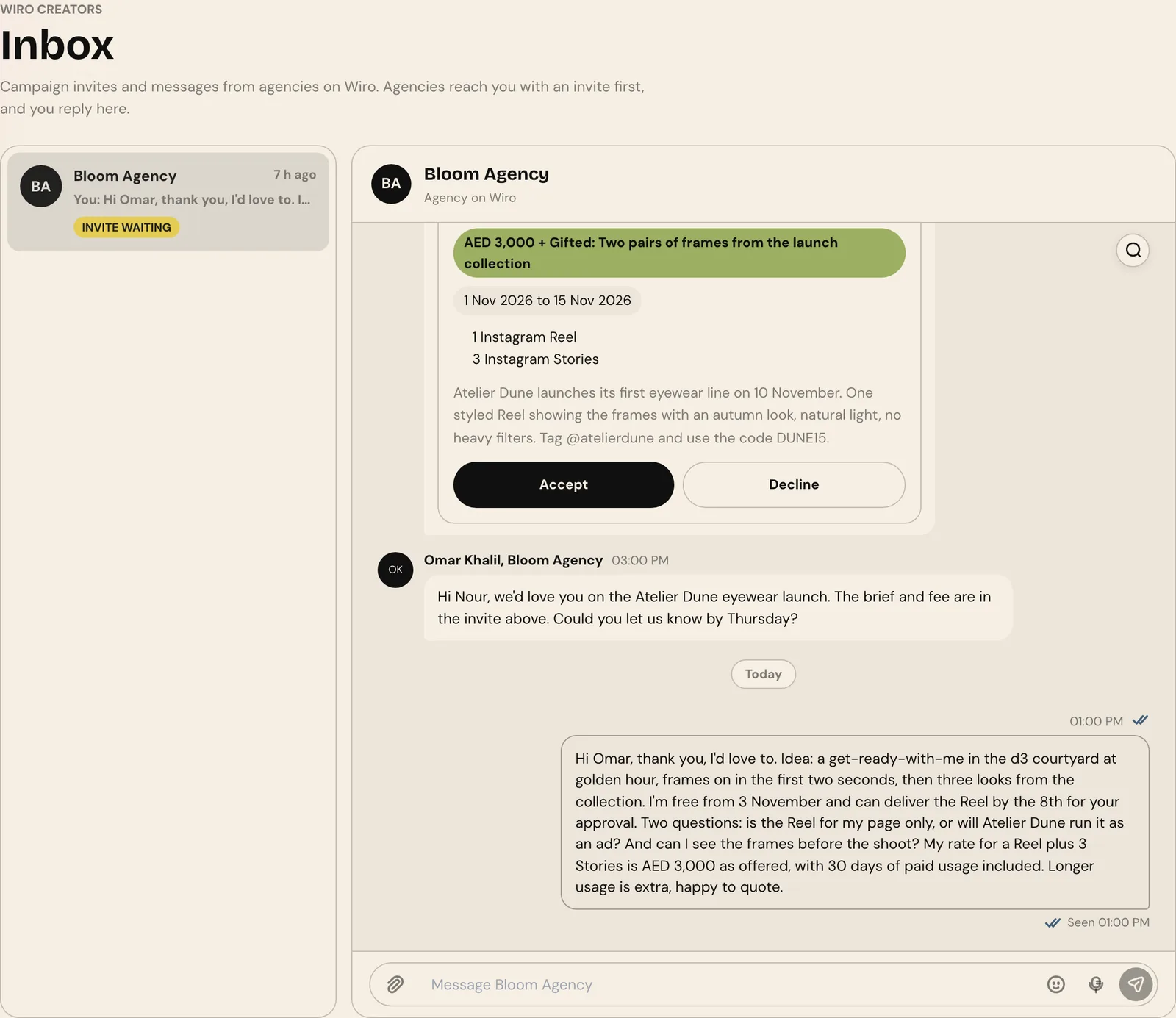
If something you need is missing, that becomes one of your questions. If you cannot meet something fixed, say so now, not after you have agreed.
Step 2: Reply with one idea, not a menu
Pitch one concept in two sentences: what happens in the video, and why it suits the product. One clear idea shows you have thought about this brand; three vague ones read like a template. Put the product in the first seconds of the idea, because that is what the brand will judge.
Step 3: Show proof that matches
Link two or three pieces that look like what you are proposing, not your most popular post. A sharp beauty tutorial does not prove you can make a calm eyewear reel. If your Wiro creator page has the work and your checked numbers, the link to it does most of this step.
Step 4: Confirm the dates and the price
Say when you can shoot and when the agency will have the first cut, before the brief's own deadline, so there is time for one round of changes. Then state your price and what it includes. If the invite already names a fee you accept, say so; if not, give one number and the extras it does not cover.
Step 5: Ask the questions that change the deal
- Usage: is it for your page only, or will the brand run it as an ad, and for how long?
- Product: will you see or receive it before the shoot?
- Approvals: how many rounds of changes, and who signs off?
- Payment: when is it paid, and is there a deposit?
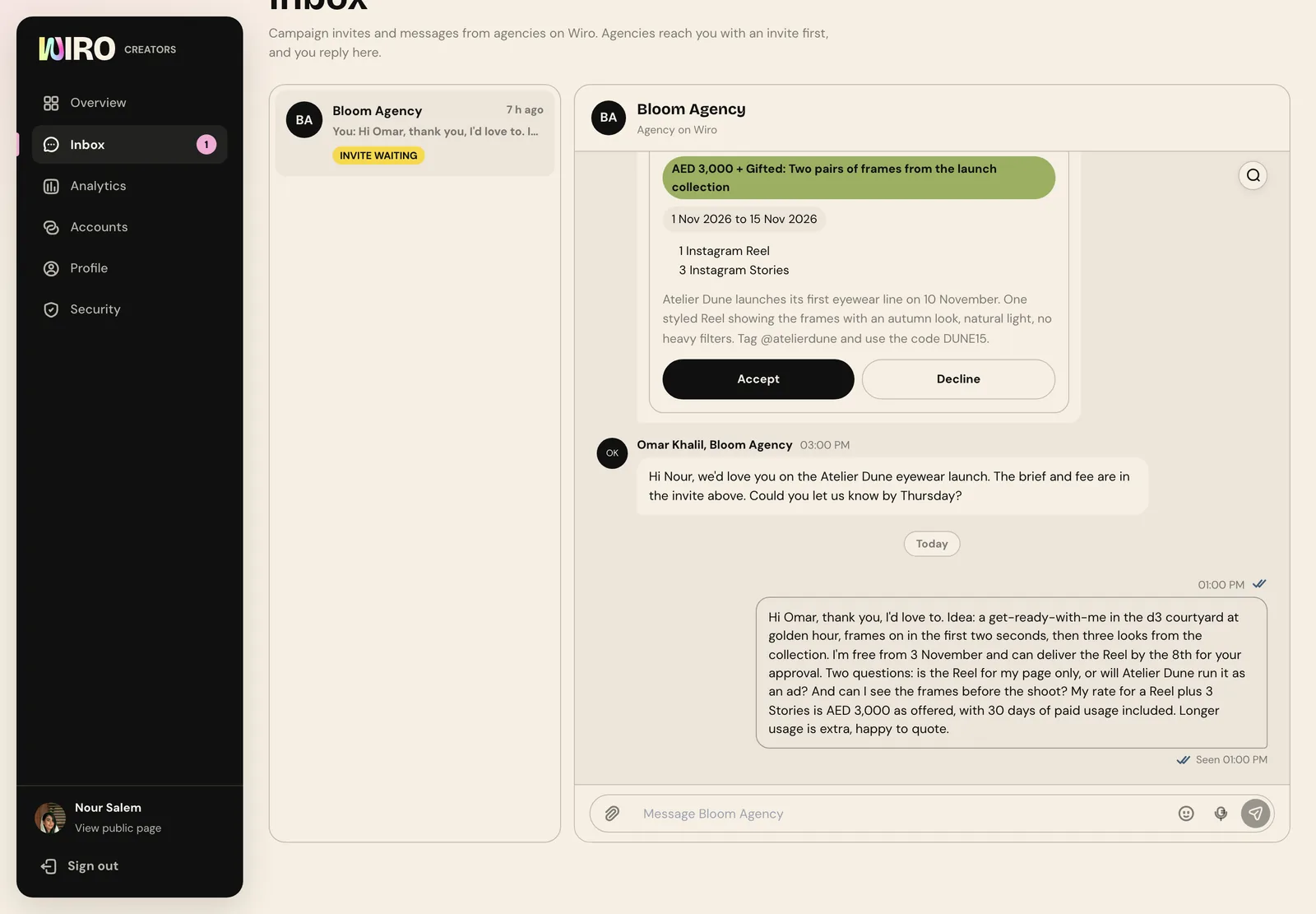
Here is the whole reply in practice. It thanks the agency, pitches one idea, confirms dates, states the price and what it includes, and asks two questions. It is short enough to read on a phone.
Step 6: Accept, or decline well
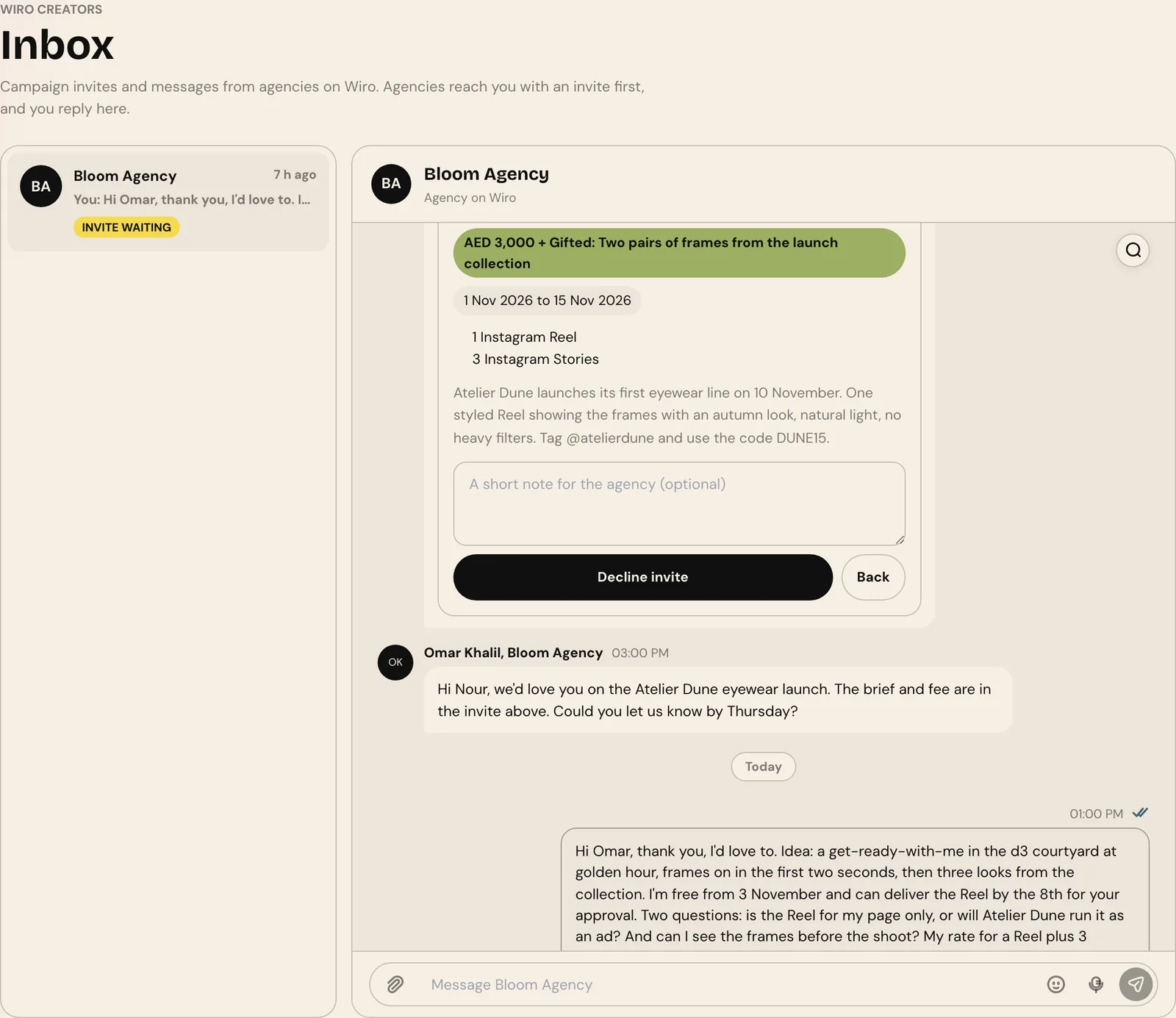
Once the answers are in, choose Accept on the invite. If the brief is not right for you, decline it, and add a short note: the dates do not work, or it is not a fit for your audience. A polite no keeps you on the agency's list for the next brief; silence usually takes you off it.
- Reply the same day if you can. A brief that goes to many creators is often half decided by the next morning.
- Keep everything in the thread. Dates, fees and usage agreed in writing in one place are easy to point back to.
- Check the tags, codes and disclosure before you post. Missing them is the most common reason good work is sent back.
The reply that gets booked answers the brief before it talks about the creator.
Agencies on Wiro send invites straight to your Studio inbox, with the brief and the fee, and we email you when one arrives. Creators can join free at creator.wiro.ae.