A creator contract is usually sent as a formality, a few days before the shoot, with a request to sign quickly. Most of it is standard. A handful of clauses are not, and they decide what you are really paid for and what you have given away. This is a checklist of those clauses, with the UAE points that apply. It is general information, not legal advice; for a large or long deal, have a lawyer read it.
1. Deliverables and dates
The contract should list exactly what you deliver (one Reel, three Stories), when the first cut is due, when it goes live, and where. Compare it line by line with the brief and the invite you accepted. A contract that says content instead of one Reel is a contract you can be asked to keep delivering under.
2. Approvals, revisions and reshoots
How many rounds of changes are included, how quickly the agency gives feedback, and what happens if they ask for a reshoot. Neo Legal, a UAE firm, lists approval rounds, turnaround times and reshoot obligations among the terms to agree in writing. One or two rounds is normal; unlimited is not.
3. Usage rights
Usage is where most of the money sits. Check whether the brand can use the content only organically on its own channels, in paid ads, or through whitelisting from your handle, and for how long and in which countries. Each of those should match what you priced. Perpetual, worldwide, all-media usage for an organic fee is the most expensive mistake in creator contracts.
4. Ownership
There is a difference between licensing your content and assigning it. Charles Russell Speechlys explains that an assignment transfers ownership, a full buy-out, while a licence lets you keep it and grants the brand set uses. Prefer a licence that matches the usage you agreed, and if the brand wants ownership, price it as a buy-out.
5. Exclusivity
Exclusivity stops you working with competitors. Check the category (eyewear, or all fashion?), the length, and whether it starts at signing or at posting. Exclusivity has a cost to you in lost work, so it should have a price in the deal.
6. Payment, deposits and kill fees
- The amount, the currency, and whether VAT is added on top if you are registered.
- When you are paid. Influencer Marketing Hub says net 30 is the most common term in creator quotes, but brands routinely push for net 60 or longer, and talent managers often insist on 50% upfront.
- A kill fee if the campaign is cancelled after you have started, so the work you have done is paid.
- What happens if they pay late. UAE commercial law allows interest on late payment, and a written, fixed debt can go to the courts as a payment order after at least five days' written notice. A late-payment line in the contract makes both easier.
7. Disclosure, content rules and the advertiser permit
Paid content in the UAE must be clearly marked as advertising and kept separate from your other content. The long-standing guidance is that a buried hashtag, or words like thank you or in cooperation with, are not enough. Since 1 February 2026, anyone posting ads from the UAE, paid or gifted, needs the advertiser permit from the National Media Authority, which took over from the Media Council in December 2025. Brands must check that creators hold one, so expect a clause asking you to confirm it. Some sectors, including health, finance, real estate and education, need extra approval before posting.
8. Conduct clauses, termination and the law that applies
Many contracts let the brand end the deal and take content down if you do something that harms its reputation. Check that the wording is specific and that you are paid for work already delivered if it is used. Last, check which country's law applies and which courts settle disputes. For a creator based in the UAE, a contract under UAE law is easier to enforce than one under a foreign law.
Keep the deal in writing, in one place
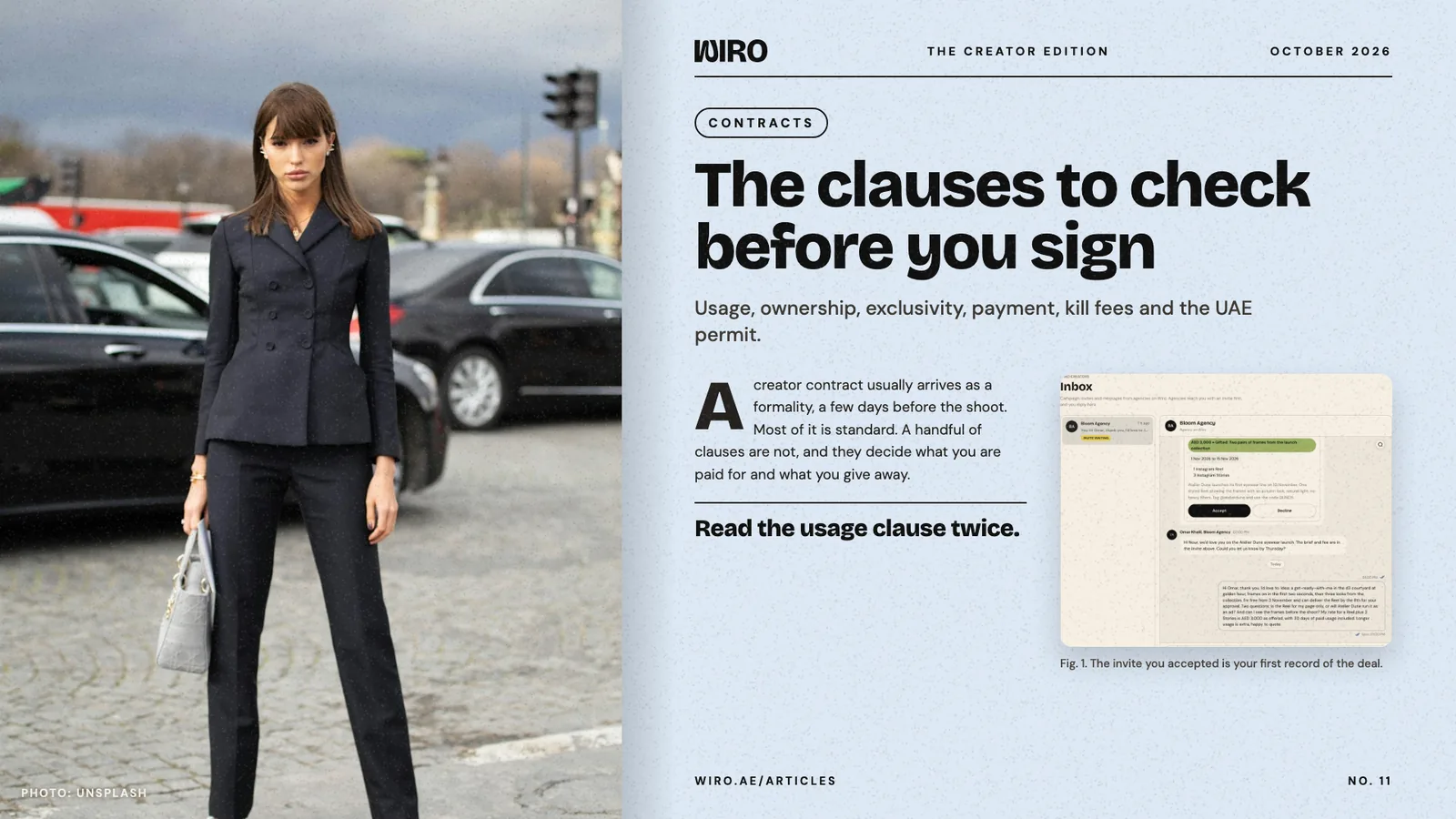
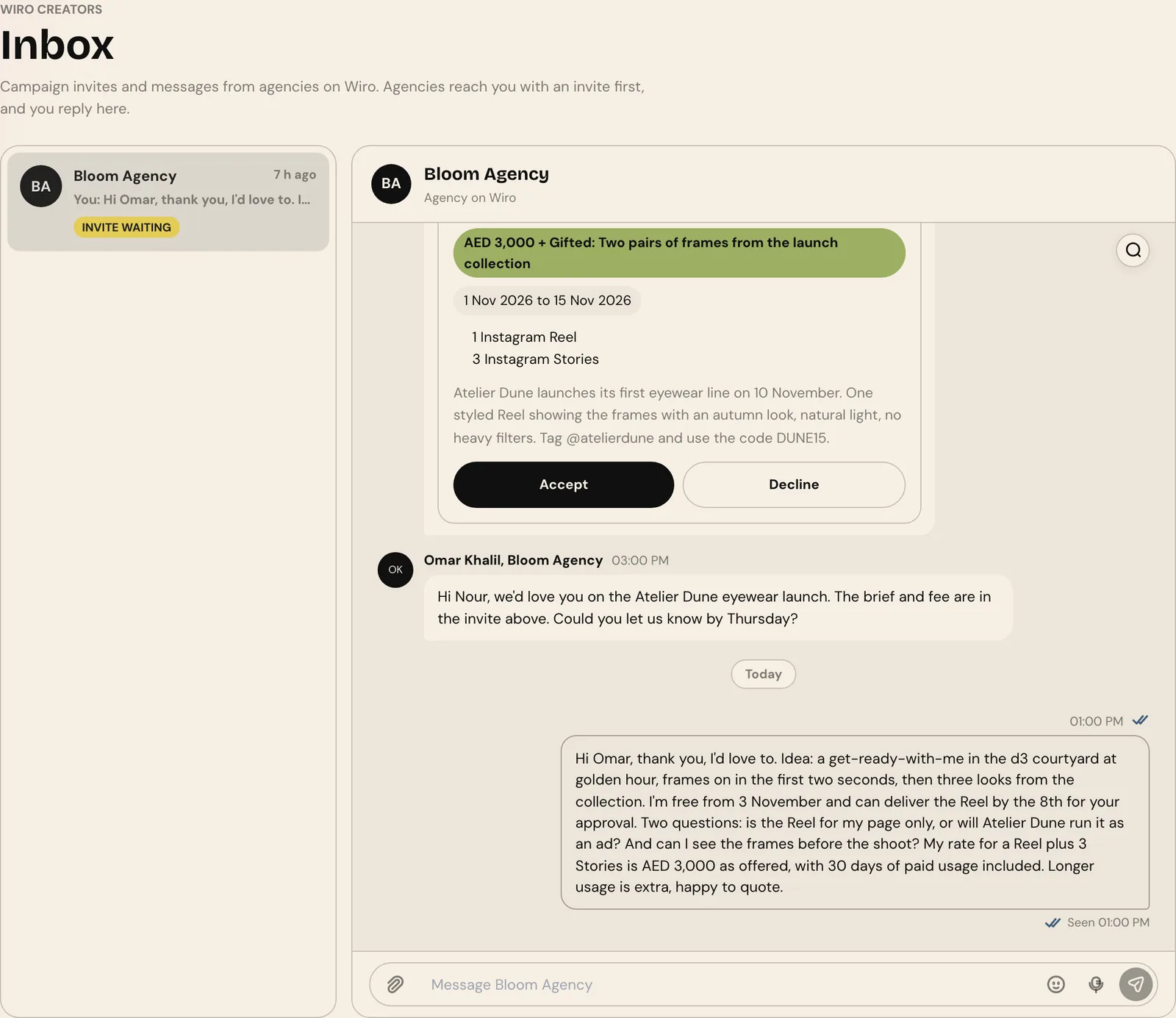
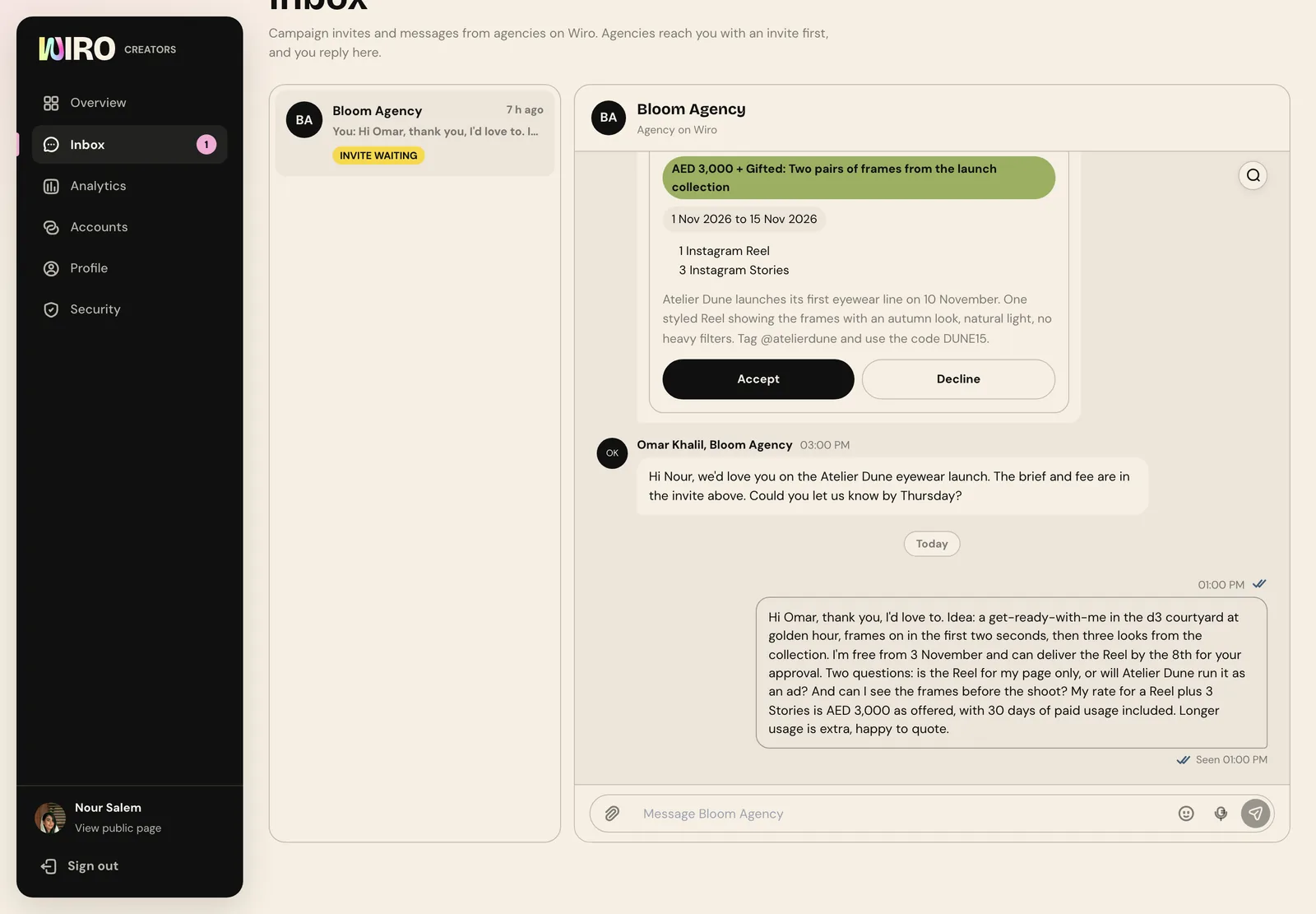
Before you sign, ask your questions in the same thread where the invite arrived, so the answers sit next to the terms. In Wiro's creator inbox the invite, the fee, the dates and the conversation with the agency are kept together.
Read the usage clause twice. It decides what you are really selling.
If a clause is unclear, ask for it in plain words. A good agency would rather explain a contract than have a creator sign something they will dispute later.