The UAE is moving from PDF invoices to structured electronic invoices exchanged through accredited service providers. The Ministry of Finance set up the system in September 2025 with Ministerial Decisions 243 and 244, and in May 2026 it amended the timeline with Ministerial Resolution 66 of 2026, after businesses asked for more choice of providers and better pricing. The first hard deadline is now weeks away.
The timeline
- Pilot and voluntary adopters: live from 1 July 2026, by invitation.
- Revenue of 50 million dirhams or more: appoint an accredited provider by 30 October 2026, which moved from 31 July, and go live on 1 January 2027.
- Revenue under 50 million dirhams: appoint a provider by 31 March 2027 and go live on 1 July 2027.
- Government entities: appoint by 31 March 2027 and go live on 1 October 2027.
Most independent agencies fall in the under 50 million group, so their own deadline is March 2027. Many of their clients do not.
How it works
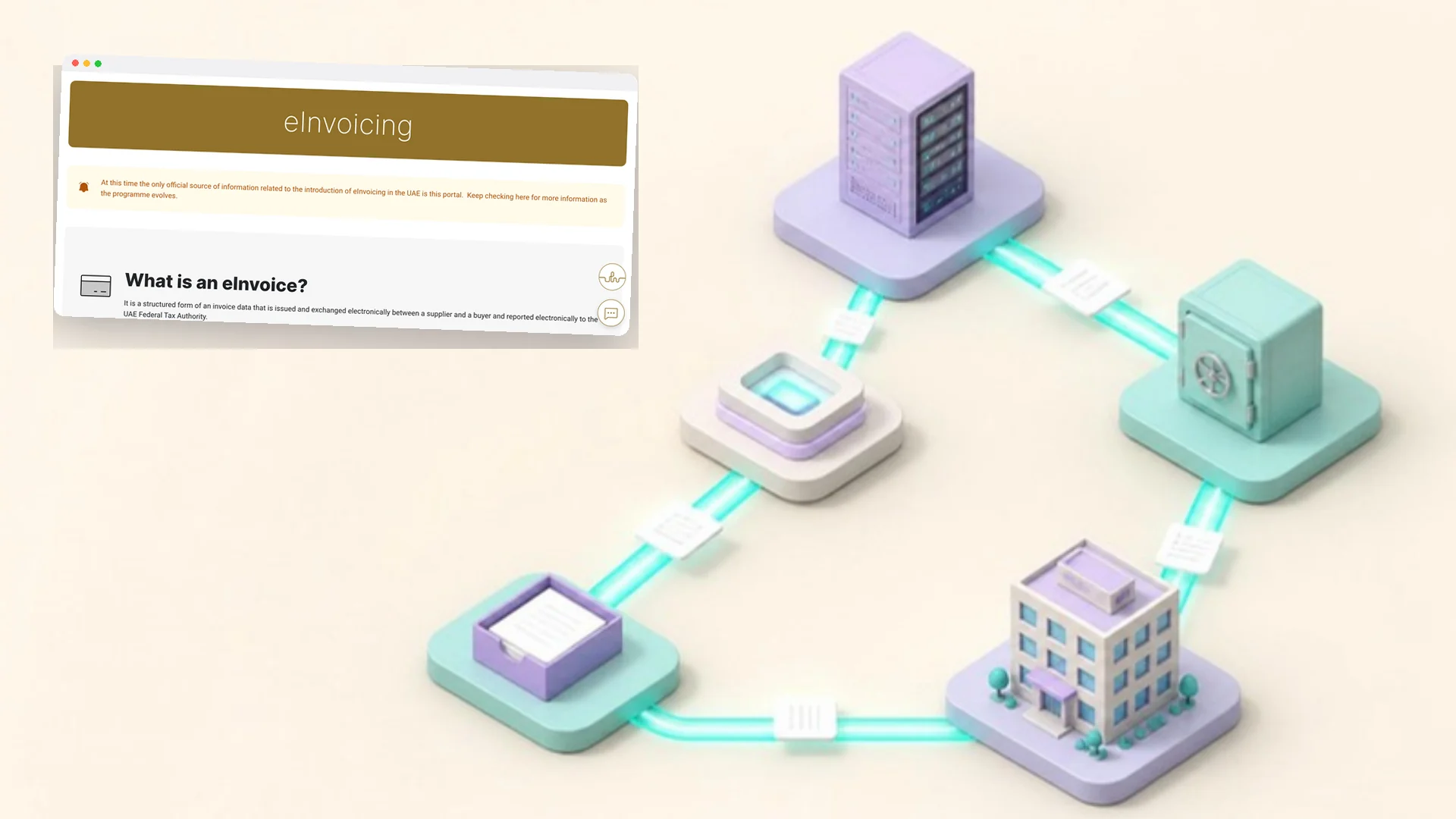
The system is based on Peppol and uses what the ministry calls a five-corner model. The supplier sends the invoice through its accredited provider, which delivers it to the buyer's accredited provider and on to the buyer, and the Federal Tax Authority receives the data as the fifth corner. In May 2026 the ministry also allowed white-label partnerships with international providers, and 32 providers had been pre-approved at that point.
Penalties
Penalties are set by Cabinet Decision 106 of 2025, which we have since checked against the Ministry of Finance's published text. Failing to implement the system, including not appointing a provider on time, costs 5,000 dirhams for each month or part of a month of delay. Each e-invoice or electronic credit note not issued on time costs 100 dirhams, up to 5,000 dirhams a month, and failing to report a system failure or to update your provider costs 1,000 dirhams a day. The full table is in our separate article on e-invoicing penalties.
What agencies should do now
- Find out which clients have revenue of 50 million dirhams or more. They go live in January, and their finance teams will be setting up how they receive invoices from suppliers. Ask them what they will need from you.
- Clean your client records: legal names, addresses and tax registration numbers exactly as registered. Structured invoices expose bad data that a PDF hides.
- Check whether your accounting software already connects to an accredited provider, or plans to, before choosing one separately.
- Put 31 March 2027 in the diary if you are under the threshold, and start comparing providers in January rather than March.
- Until your own phase goes live, the current tax invoice rules continue to apply to you.
Three other tax changes this year
- VAT: amendments made by Federal Decree-Law No. 16 of 2025 took effect on 1 January 2026. Self-invoices under the reverse charge are no longer required, though supporting documents must still be kept; there is now a five-year limit on claiming refunds of excess VAT; and the FTA must deny input VAT where the buyer knew, or should have known, that a supply was linked to tax evasion.
- Small business relief for corporate tax has been extended. Ministerial Decision No. 131, reported on 7 August 2026, covers tax periods ending on or before 31 December 2029, with the revenue threshold unchanged at three million dirhams.
- The 10,000 dirham penalty for late corporate tax registration is waived if the first return is filed within seven months of the end of the first tax period. The FTA reported more than 68,600 businesses had benefited.
The invoice generator on this site produces a tax invoice with the fields the current rules require, and the VAT calculator checks the VAT on any amount, inclusive or exclusive.