A brand's Reel suddenly goes silent, or a TikTok made for a client disappears. Almost always the cause is the music: the trending track was never licensed for commercial use.
Instagram and Facebook
- Meta's Music Guidelines say using music for commercial or non-personal purposes is prohibited unless you hold the appropriate licences, and content may be blocked, muted or removed. Meta recommends shorter clips, but that is advice, not a licence.
- Instagram's licensed music library is for personal, non-commercial use, and certain business accounts and types of post do not have access to it.
- Meta's Sound Collection offers more than 14,000 royalty-free songs and sounds that can be used for commercial purposes, including ads.
TikTok
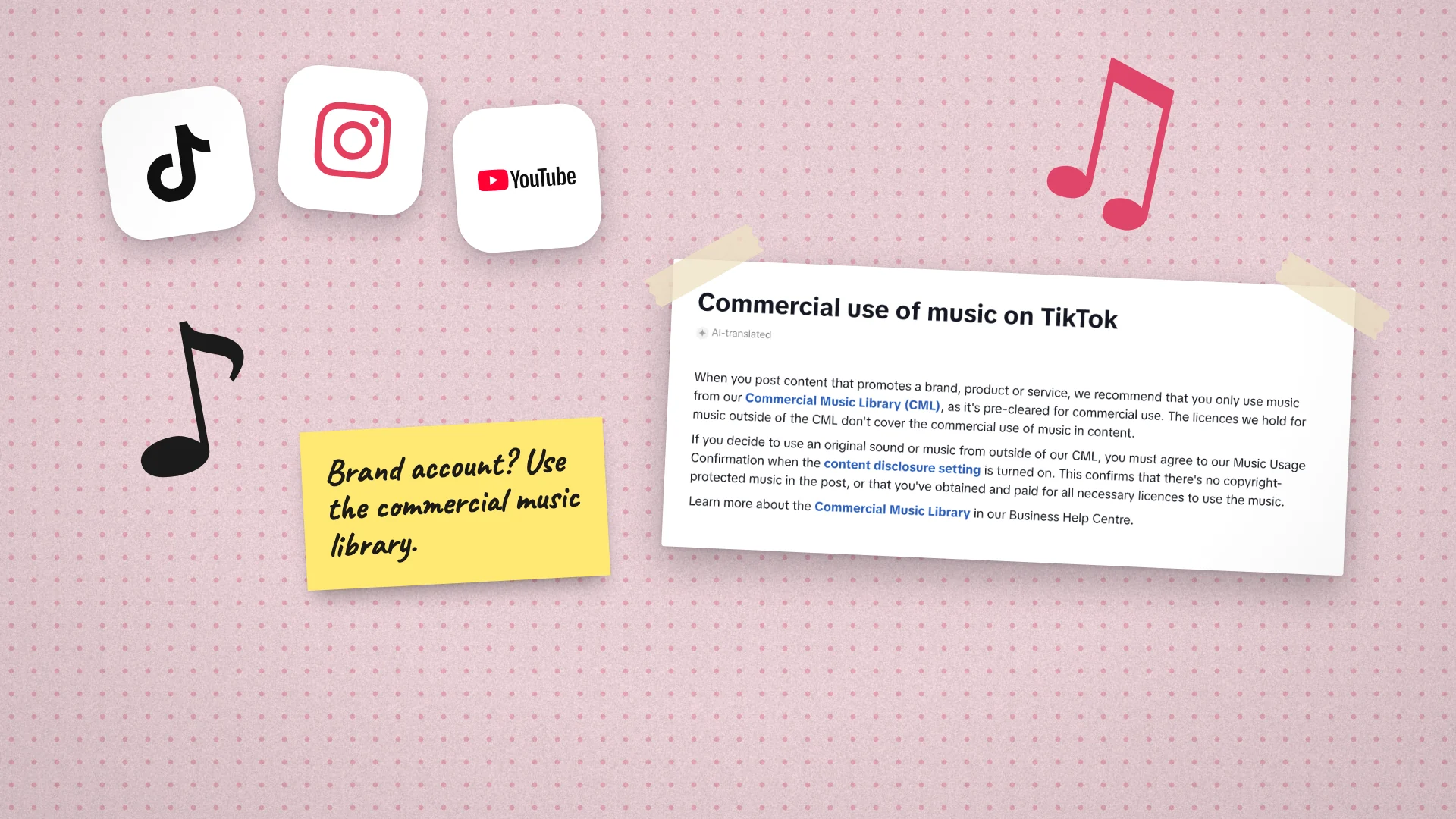
- Business accounts cannot use the general music library commercially. The Commercial Music Library, pre-cleared worldwide, has about one million tracks for organic posts, ads and branded content.
- TikTok's terms say commercial sounds are the only ones available for commercial use, and that commercial use outside TikTok is not permitted. Some premium tracks may cost extra.
- For creators' branded posts, TikTok recommends Commercial Music Library tracks only, because its licences for other music do not cover commercial use. A creator who turns on the branded content disclosure and uses other music must confirm the post contains no copyrighted music, or that they hold and have paid for every licence.
YouTube
- The YouTube Audio Library offers royalty-free music and sound effects that will not be claimed by a rights holder, and videos using it can be monetised. Creative Commons tracks need a credit in the description.
- Content ID claims can block, monetise or track a video, and can differ by country.
- Google Ads does not allow copyrighted content to be used in a way that infringes.
What UAE law adds
Only the author or rights holder may authorise reproduction or communication to the public, and record labels hold exclusive rights in their recordings, including the right to stop unlicensed use. Infringement carries at least two months in prison and/or a fine of AED 10,000 to 100,000, more for repeat offences. The law allows licensed collective management associations, but we could not confirm that any music collecting society currently holds a permit in the UAE.
Myths worth dropping
- Under 15 seconds is fine. No source supports a safe length.
- Crediting the artist makes it legal. A credit is not a licence.
- It is the creator's own account, so trending audio is fine in a paid post. TikTok says its licences do not cover commercial use.
- Royalty-free means use it anywhere. Platform libraries are licensed for use on that platform.
A workflow that avoids takedowns
- Choose music from the platform's commercial library at the brief stage, not in the edit.
- For ads running across platforms, or for music outside the libraries, license the track directly in writing, stating purpose, duration and territory, as UAE law requires of any licence.
- Put the music rule in creator briefs and contracts.
- Keep a record of the source and licence for every track you use.
Our guide to writing an influencer brief creators follow covers where to put rules like this.