If a client asks about Meta's Muse, the first job is working out which Muse they mean. Meta Superintelligence Labs, the AI group Meta formed in 2025 under its chief AI officer Alexandr Wang, uses the name for a whole family: the language models behind Meta AI, an image model, a video model, an open model for developers, and, since 8 September 2026, a consumer app called simply Muse that acts on people's behalf. The app is the launch most people are talking about. It is not available in the Gulf yet, but the models behind it already shape what Gulf audiences see in Meta's apps and what Meta's ad tools can make.
The Muse family, in order
- Muse Spark, 8 April 2026: the first model in the series, a multimodal reasoning model that now powers Meta AI. Meta did not release its weights, and updated versions followed through the summer.
- Muse Image, 7 July 2026: Meta's new image model, in the Meta AI app and on meta.ai, with a preview of Muse Video alongside it.
- Muse Glimmer, 10 August 2026: an open model with 30 billion parameters under the Apache 2.0 licence, aimed at developers building agents, according to trade reports.
- Muse Image for developers, 25 August 2026: the image model through Meta's model API, at one US cent per image.
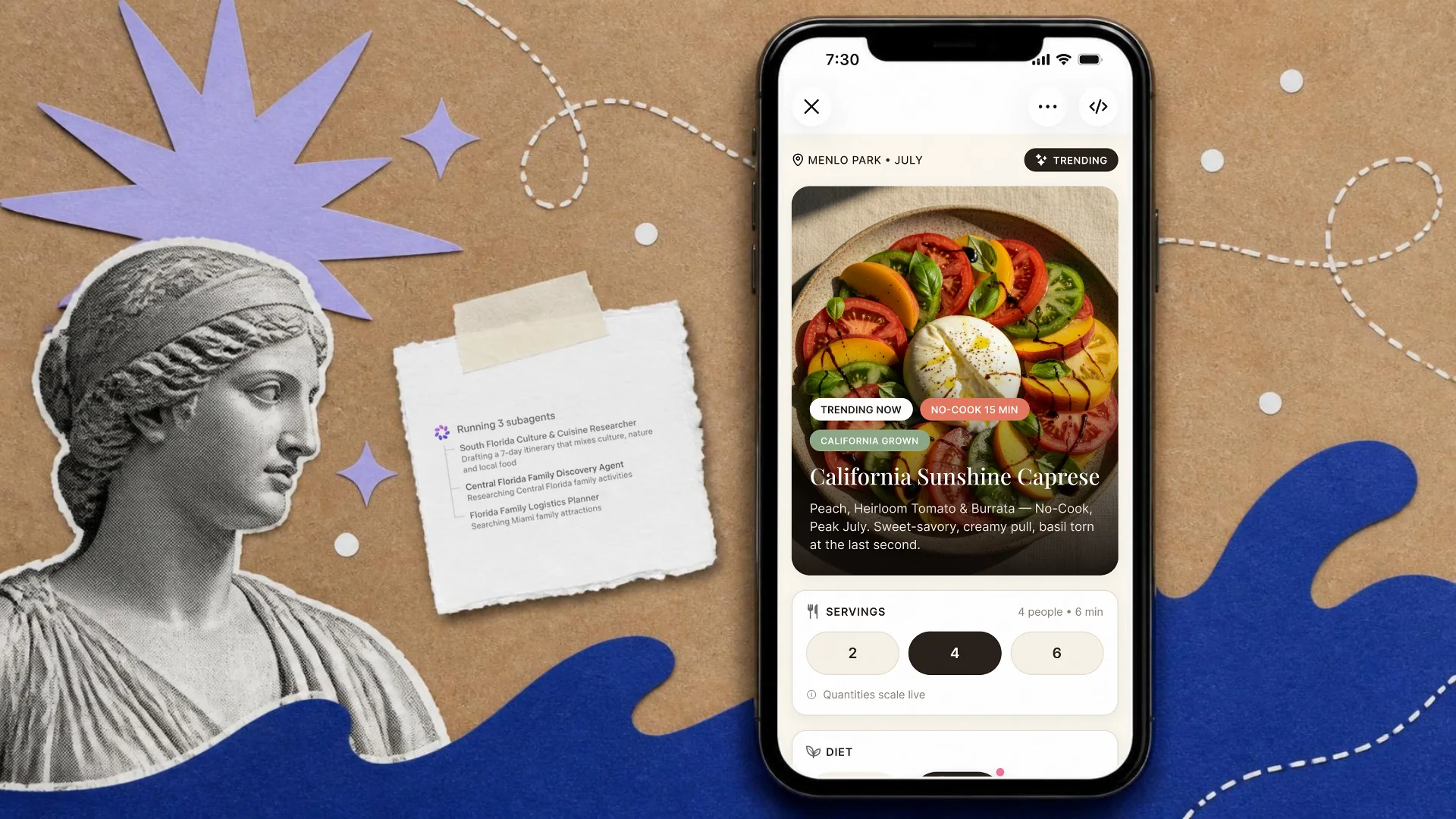
- Muse, 8 September 2026: a personal AI agent app built on Muse Spark, which can send emails, make bookings, fill in forms and buy things.
- Meta Connect, 23 September 2026: a real-time avatar model, Muse on Meta's glasses in the coming months, Muse controlling a Mac, and a small Muse device called Muse Charm.
What each one means for agencies
- Muse Spark is the model behind Meta AI, the assistant inside WhatsApp, Instagram, Facebook and Messenger. Meta says daily users of Meta AI rose 60 percent after it was rebuilt on Muse Spark. For brands, it is what answers people's questions about products inside Meta's apps.
- Muse Image makes and edits pictures from a conversation. It powers new effects in Instagram Stories in the US, and Meta says it is coming to Advantage+ creative, the AI tools inside Ads Manager. Mark Zuckerberg told investors in July that it would supercharge ad creative.
- Muse Video is still a preview. Meta says it generates video with sound and competes on following prompts and visual quality, but admits gaps in syncing sound to picture and in fast motion. It has not launched.
- The Muse agent acts rather than answers. For now it matters to agencies as a signal: Meta wants people to shop and book through an agent, which will change how brands are found.
What is available in the Gulf
Meta AI has worked in Arabic in the UAE and Saudi Arabia since February 2025, and it now runs on Muse Spark. Beyond that, the picture is thin:
- The Muse agent launched in the US for people aged 18 and over, and reached Canada on 18 September. It is not available in the Gulf, and Meta has given no date.
- Meta has not confirmed Muse Image in the UAE or Saudi Arabia, or that it handles Arabic prompts or Arabic text in images. Khaleej Times advised UAE users to check whether the features appear in their own account.
- Meta One, Meta's new subscription, is sold in the UAE, and its Core and Premium plans give more image and video generation powered by Muse models. Gulf News and Khaleej Times put Core at Dh22.99 and Premium at Dh76.99 a month; check the price in the app.
The controversies so far
- At launch, Muse Image let people mention any public Instagram account and use its photos in a picture, with accounts included by default and owners not told. After criticism from the talent agency CAA and the actors' union SAG-AFTRA, and reports that it could be used for deepfakes, Meta removed that feature on 10 July. Muse Image itself was not withdrawn, whatever some headlines said.
- Muse Image's pictures carry an invisible watermark Meta calls Content Seal, but no visible mark, and Engadget reported that it does not use the C2PA industry standard.
- Amazon blocked the Muse agent from its store within two weeks of launch, and Nat Friedman, head of product at Meta's AI lab, acknowledged that Muse was heavily inspired by OpenClaw, an open-source agent.
- The rock band Muse handed its social media handles to Meta, and now posts as @museband on Instagram.
Other things called Muse
Not every Muse is Meta's. Microsoft published a games model called Muse in 2025, and Google had a research image model of the same name in 2023. Several websites also use the name to sell image and video tools that have nothing to do with Meta; none of them are on Meta's domains. Meta's own products live in its apps, on meta.ai and on muse.ai.
What to do now
- Treat Muse Image as the part that matters this year for Gulf clients: it is where Meta's AI creative tools for ads are heading.
- Label AI-generated images in client work yourself, whatever Meta does automatically.
- Watch for the agent's arrival in the Gulf. When people can ask an agent to find and buy, what the agent can read about a brand, from its website to its catalogue and reviews, is likely to matter more.
- Be wary of third-party sites trading on the Muse name.
The ad mockup generator on this site shows any image, generated or not, in every Meta placement before it runs.