AI Max for Search campaigns is Google's set of AI features for ordinary Search campaigns. Launched in May 2025, it came out of beta in April 2026, became the default for new Search campaigns, and from 1 September 2026 began absorbing two older settings. For agencies running Search accounts in the Gulf, the upgrade is happening now, and it changes which searches ads match and what they say.
What AI Max does
- Search term matching: broad match plus keywordless matching, which finds searches from the site's content and the ads, not only from keywords.
- Text customisation: headlines and descriptions written by Google's AI from the landing page, ads and keywords.
- Final URL expansion: sending each person to the page on the site Google judges fits their search best, rather than the page the advertiser chose.
- Controls: brand inclusions and exclusions, locations of interest, and URL inclusions and exclusions.
The September upgrade
Google's help pages say that from September 2026, campaigns using the campaign-level broad match setting, and campaigns using text customisation, formerly called automatically created assets, are upgraded to AI Max automatically. The upgrade runs progressively through the month, and Google expects to finish by the end of September. Since 3 August neither setting can be created, in the interface, Google Ads Editor or the API.
What upgraded campaigns get, according to Google's developer announcement as reported by trade press:
- Campaigns that used campaign-level broad match: search term matching on, text customisation off, final URL expansion off.
- Campaigns that used automatically created assets: search term matching on, text customisation on, final URL expansion off.
- Existing brand inclusion and exclusion lists carry over.
Keyword-level broad match does not trigger the upgrade; only the campaign-level setting does. After the upgrade, each AI Max setting can be switched off, and switching AI Max on again restores the earlier configuration. Once the old automatically created assets are off, they cannot be switched back on; they return only through AI Max.
Dynamic Search Ads: February 2027
Dynamic Search Ads were originally due to move in September too. In June Google pushed that back to February 2027, citing advertiser feedback and the holiday season. Trade reports say new DSA campaigns can be created until January 2027. When they move, dynamic ad groups become standard ad groups with all three AI Max features on, and their URL rules and history carry over. Some of Google's own pages still show the old September date.
Controls to set now
- Brand exclusions, so a non-brand campaign does not pay for the client's own brand searches, and brand inclusions to keep brand campaigns tight.
- URL exclusions, so final URL expansion cannot send people to careers pages, blog posts or expired offers.
- Search term matching switched off for ad groups that must stay exact.
- Negative keywords, which still apply.
- Locations of interest at ad group level, for campaigns aimed at people interested in a place rather than in it.
Final URL expansion only works when text customisation is on, so an advertiser who keeps text customisation off also keeps landing pages under their control.
Reporting
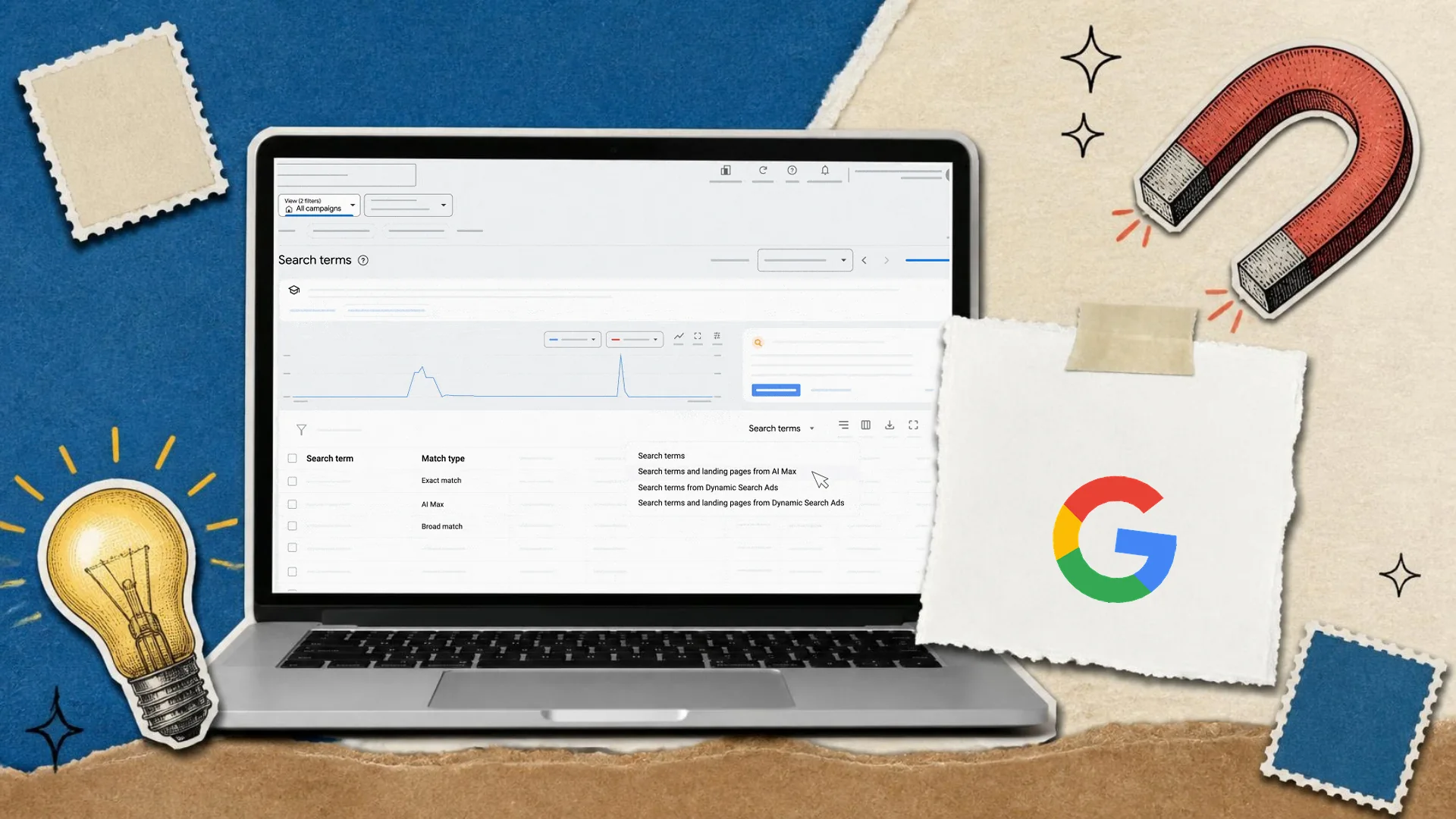
- The search terms report shows an AI Max match type, and a view of each search term with the ad combination that ran.
- The keywords report adds summary rows for AI Max expanded matches and AI Max landing page matches.
- The landing pages report shows who selected each page, and Google-made assets are marked Google AI.
- Low-volume search terms are hidden for privacy, so search term totals will not match campaign totals.
In September Google announced a single report showing the search term, the ad seen and the landing page together, with no date yet.
What the results look like
Google's claims: in 2025, advertisers turning AI Max on typically saw 14 percent more conversions or conversion value at a similar cost, and 27 percent for campaigns mostly on exact and phrase match, excluding retail. In April 2026 it said the full set of features gives 7 percent more than search term matching alone. Google has not published sample sizes or methods for these figures.
Independent tests are mixed. Smarter Ecommerce's analysis of more than 250 Search campaigns found median conversion value up 13 percent but median cost per acquisition up 16 percent, with return on ad spend spread widely either side of the baseline. Individual practitioners have published much worse results. The fair summary is that AI Max finds more conversions for some accounts, and more expensive ones for others.
What Gulf accounts should check
- Which campaigns were upgraded this month, and what was switched on.
- Search terms in both Arabic and English. Google is also removing the campaign language setting from Search campaigns in late September, so the language of the ad and landing page now matters more to which searches match.
- Landing pages chosen by final URL expansion, especially on bilingual sites, where Google may pick the other language's page.
- Generated headlines, if text customisation is on. AI Brief, which lets advertisers give Google written guidelines, supports English and seven other languages, not Arabic.
- Cost per acquisition before and after the upgrade, over at least four weeks.
The UTM builder on this site tags links consistently, so the client's analytics can show which landing pages final URL expansion is sending people to.